Choose a small connection rather than a grand circuit
Select two nearby points in the canal area and check a suitable route between them. Use the map to keep the return to your accommodation straightforward. Start where you already are if possible rather than making a large detour to reach an allegedly perfect starting position.
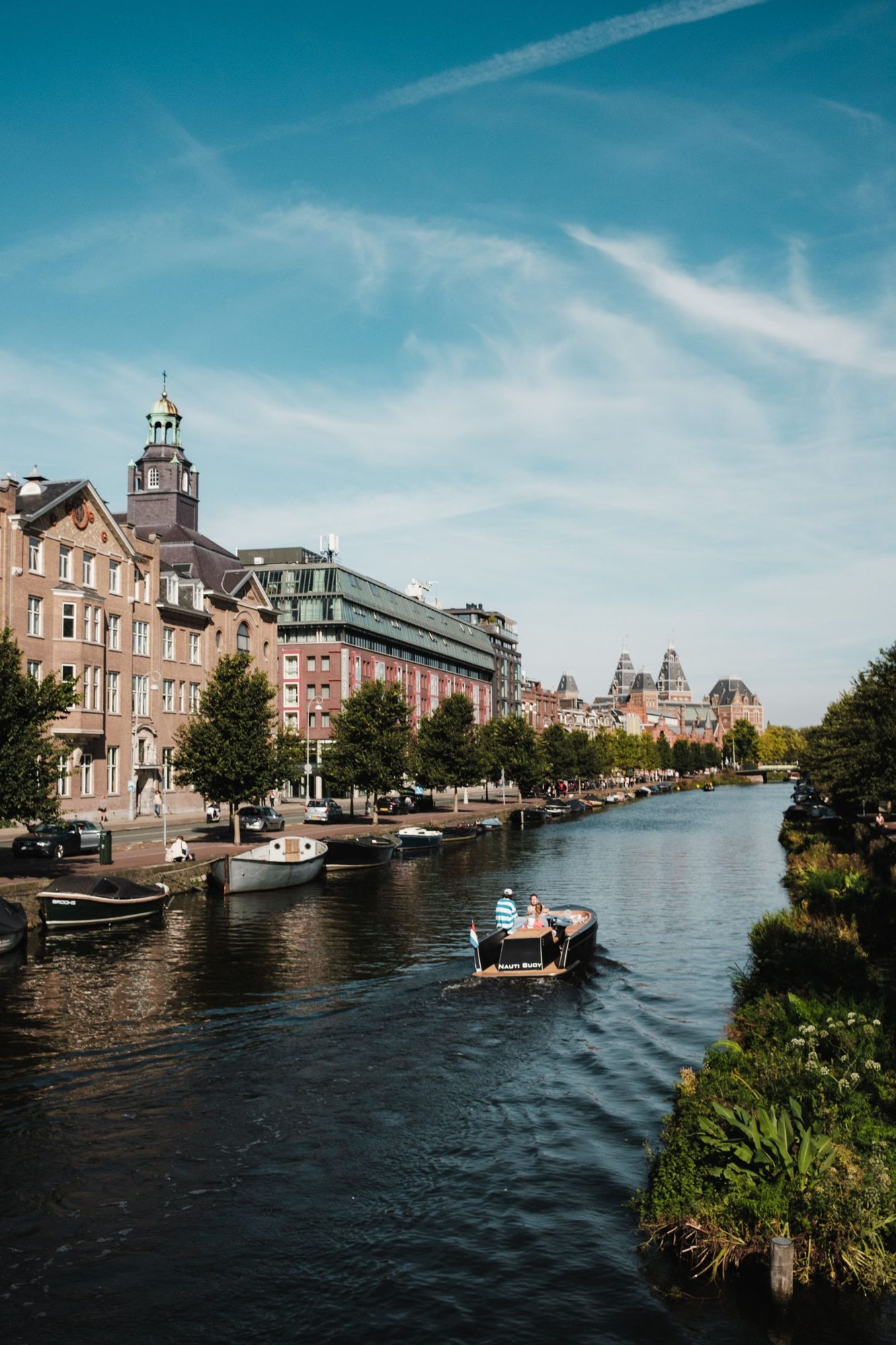
Pay attention to bridge connections. A destination on the opposite side of a canal is not necessarily directly accessible across the water. A small change of direction can alter the walk considerably. Save the names of your starting street and intended endpoint before setting off.
Remain part of the street
Canal streets bring together walkers, cyclists, deliveries and residents. Follow the identifiable routes and stop outside traffic areas when taking photographs. Do not step backwards into moving traffic simply to fit an entire facade into the frame.
Instead, look closely at a few details: different gables, window proportions or the transition from a house to the street. Private entrances and windows are not scenery you can use without limits. Stay in public space and respect the people who live there, even when a view appears frequently in travel photographs.
Finish without adding another obligation
An exhibition evening does not also need a museum visit or boat trip. Those activities require their own time and may need booking. If you decide to add one spontaneously, let it replace part of the original plan rather than attaching everything in sequence.
For a pause, choose a cafe that is genuinely on your route. Before sitting down, check how much time remains before your return service or appointment. A limited walk with a deliberate finish leaves more room for impressions than continually moving towards the next suggested location on a screen.