Assign two areas deliberately
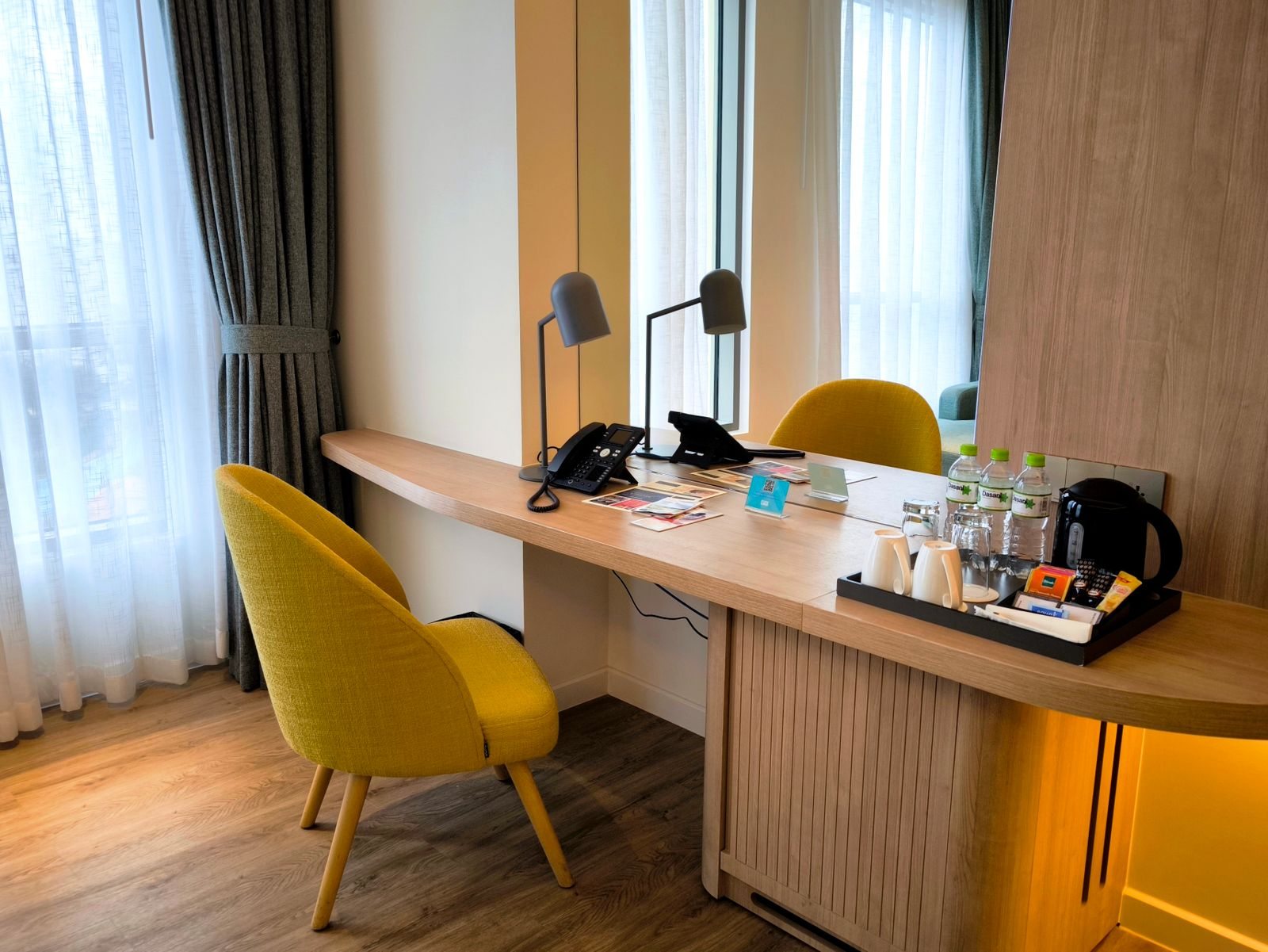
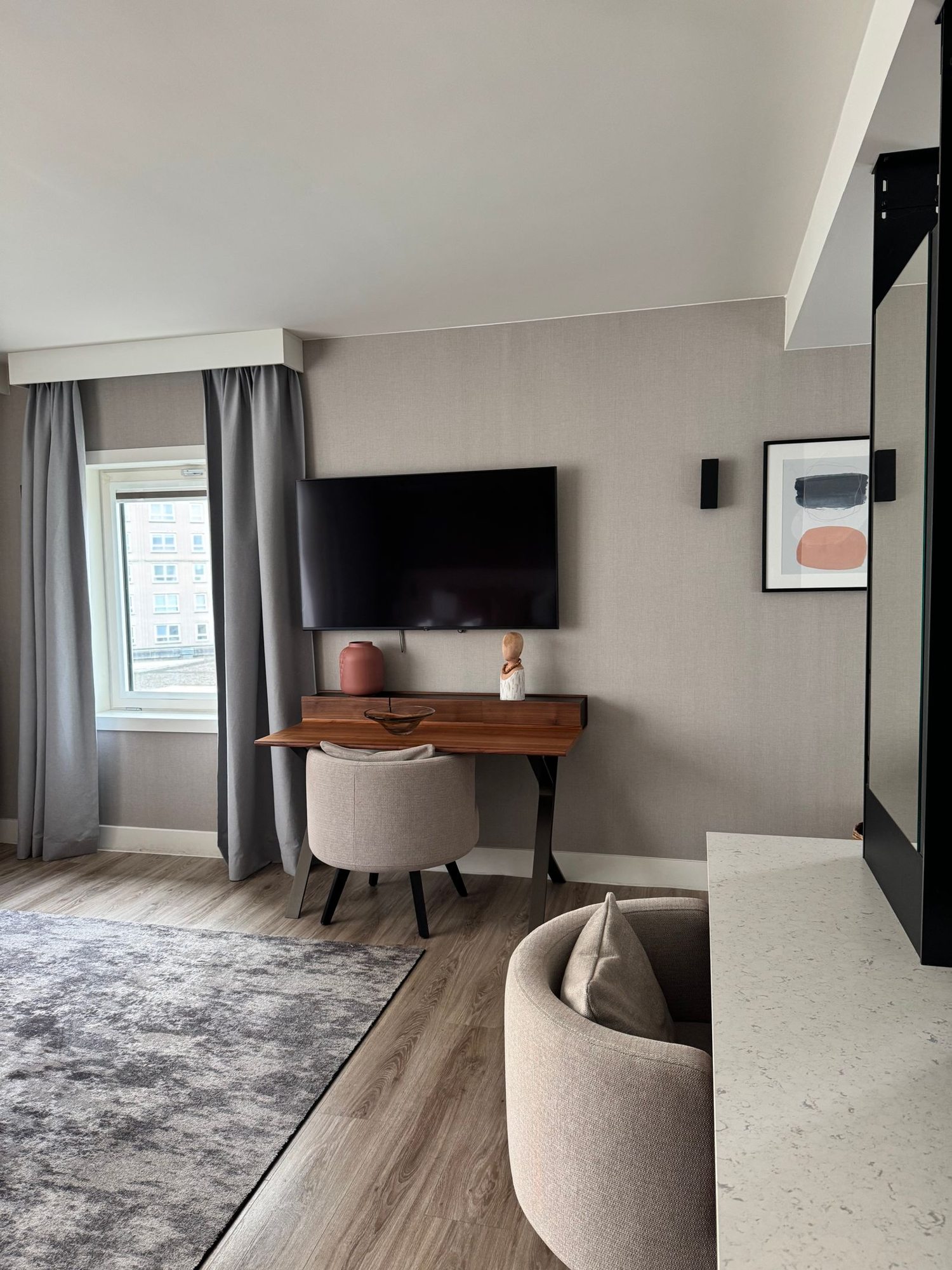
After arrival, choose a fixed place for work and another for clothing and luggage. This does not require a large room. A table with a clear surface beside it may be enough, provided papers do not spread across the bed and seating. Keep the route to the door clear. Look at the available surfaces before unpacking everything. An empty chair is often more useful in the evening than another storage spot for exhibition brochures.
Give the work area limits
Put only what the next task requires on the desk. A laptop, notebook and drink already occupy useful space. Exhibition documents can remain sorted inside a folder. If you also use the table for food, remove your equipment first; a permanently half-cleared desk works poorly for both purposes. Use one pouch for small accessories so moving the setup does not turn into a fresh search for adapters every time.
Make the end of work visible
Choose a final evening task, such as saving conversation notes and checking the next appointment. Then close files and put away papers containing confidential details. The closed laptop can stay in its bag if you no longer need it. This small action creates an ending even when the desk and bed stand close together. It is not a promise of better sleep, but it establishes a practical boundary within your routine.
Prepare only what the morning needs
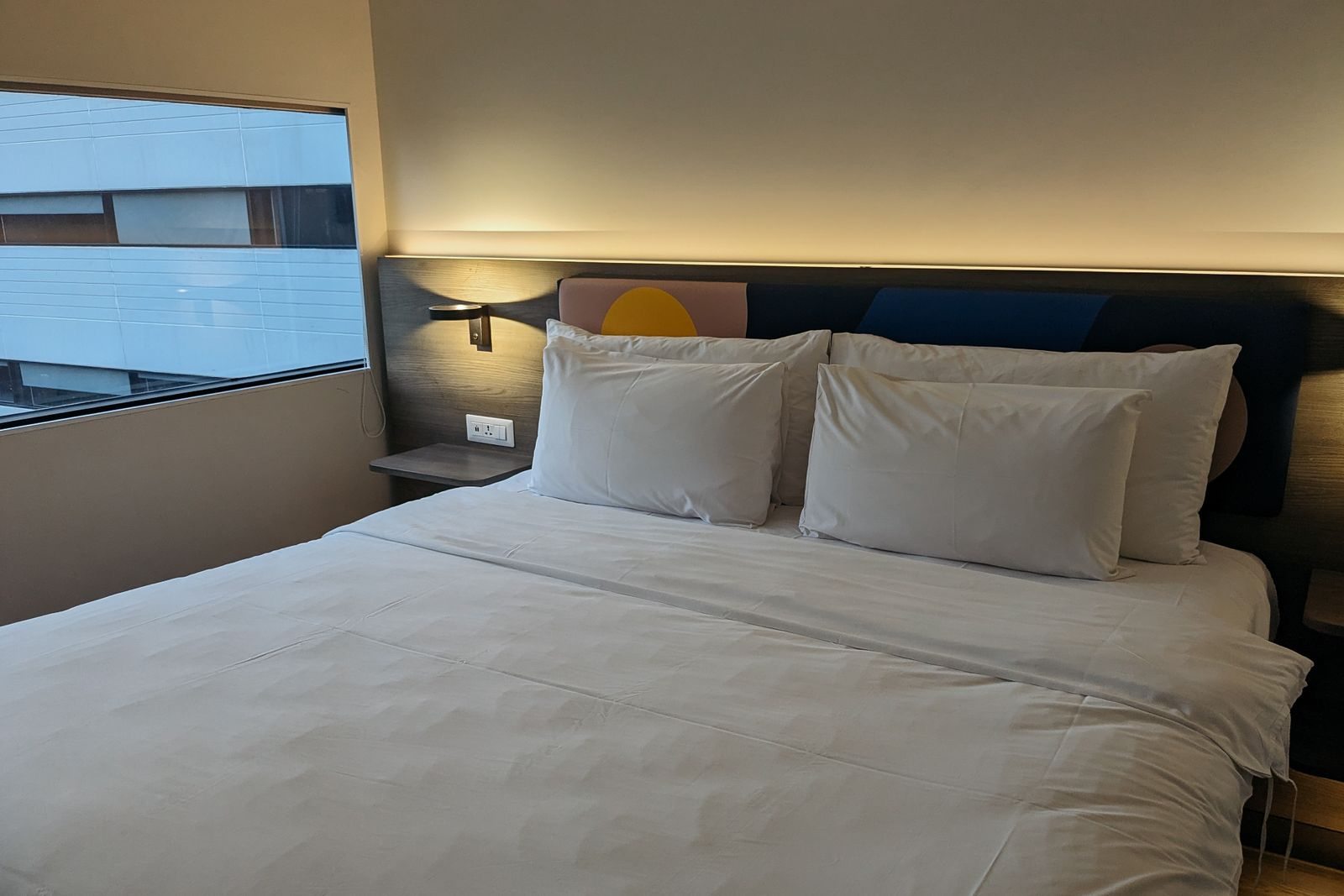
Place your clothes and packed bag in their chosen positions. A short note naming the first task is enough; there is no need to reconstruct an entire office. Avoid turning the bed into a permanent charging station and document store. If you regularly face long work sessions, prioritise usable space over decorative features when booking the next stay. Room size alone, however, does not establish whether the layout will be helpful.