Find the exposed sections
Do not treat the connection only as time on a bus or train. Where will you wait outdoors, and how long is the final walk? An apparently short transfer may involve an exposed stop or open space outside the entrance. Check available local information and allow some room for walking more slowly.
Save the correct entrance and keep the address accessible. In rain, handling a phone with one hand while managing a case and umbrella with the other is awkward. A short prepared route note can help without repeatedly taking your attention away from traffic and the surface underfoot.
Protect important contents inside
Give vulnerable documents and electronics appropriate moisture protection within the bag. Do not rely solely on an outer bag description when you do not know its limits. Check closures and open pockets. A sample made from delicate material may need its own protection according to the manufacturer's guidance.
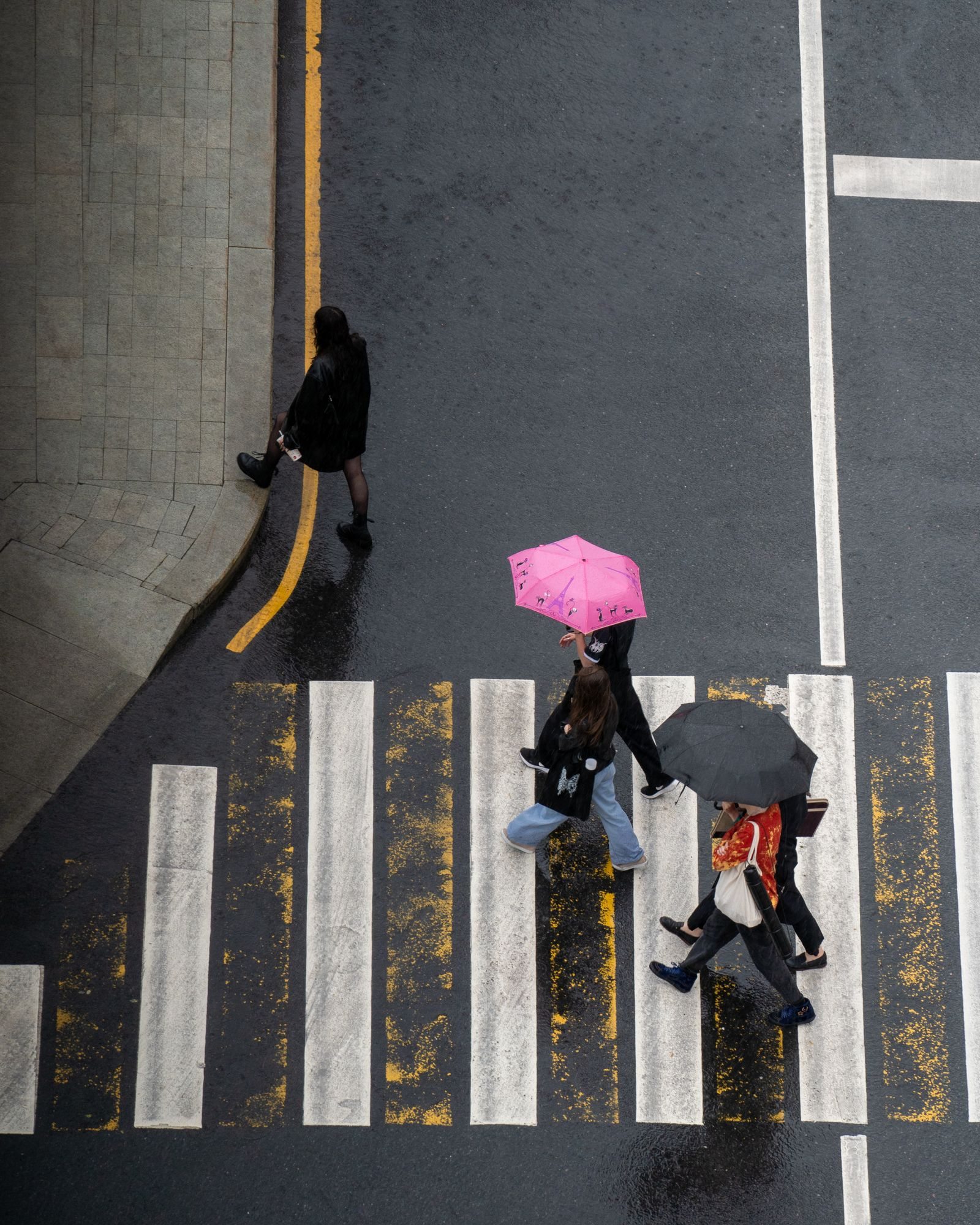
Choose rain protection that suits your luggage and clothing. An umbrella is less practical when both hands are already occupied; a suitable outer layer may make movement easier. Test the combination before travelling. You should also be able to store wet items afterwards without placing them directly on dry papers or electronics.
Finish the arrival calmly
Leave room for other visitors at the entrance and close the umbrella before entering a narrow queue. Find an appropriate place to organise dripping equipment and wet clothing. Do not put damp items on exhibition surfaces or someone else's documents. Use available storage and follow the staff's directions.
If conditions or the route are substantially worse than expected, check a suitable alternative connection. The shortest route may no longer be the most practical one. Tell a waiting appointment partner if a delay is likely. A realistic arrival estimate is more useful than hurrying in a way that makes handling luggage, navigating and keeping clothes dry unnecessarily difficult at the same time.