Start with your own materials
Look at the small things that could actually go wrong on your stand. A paper label coming loose is different from a bracket failing on a heavy display. Suitable fixings may solve the first problem; a structural component belongs with the responsible stand contractor. Pack for specific situations rather than assembling the largest possible collection of tools.
Useful items might include scissors, pens, spare labels, a soft cloth and fixings approved for your surfaces. Test adhesive material on an inconspicuous sample before applying it to rented furniture. Residue can make returning the equipment unnecessarily difficult.
Make small parts easy to find
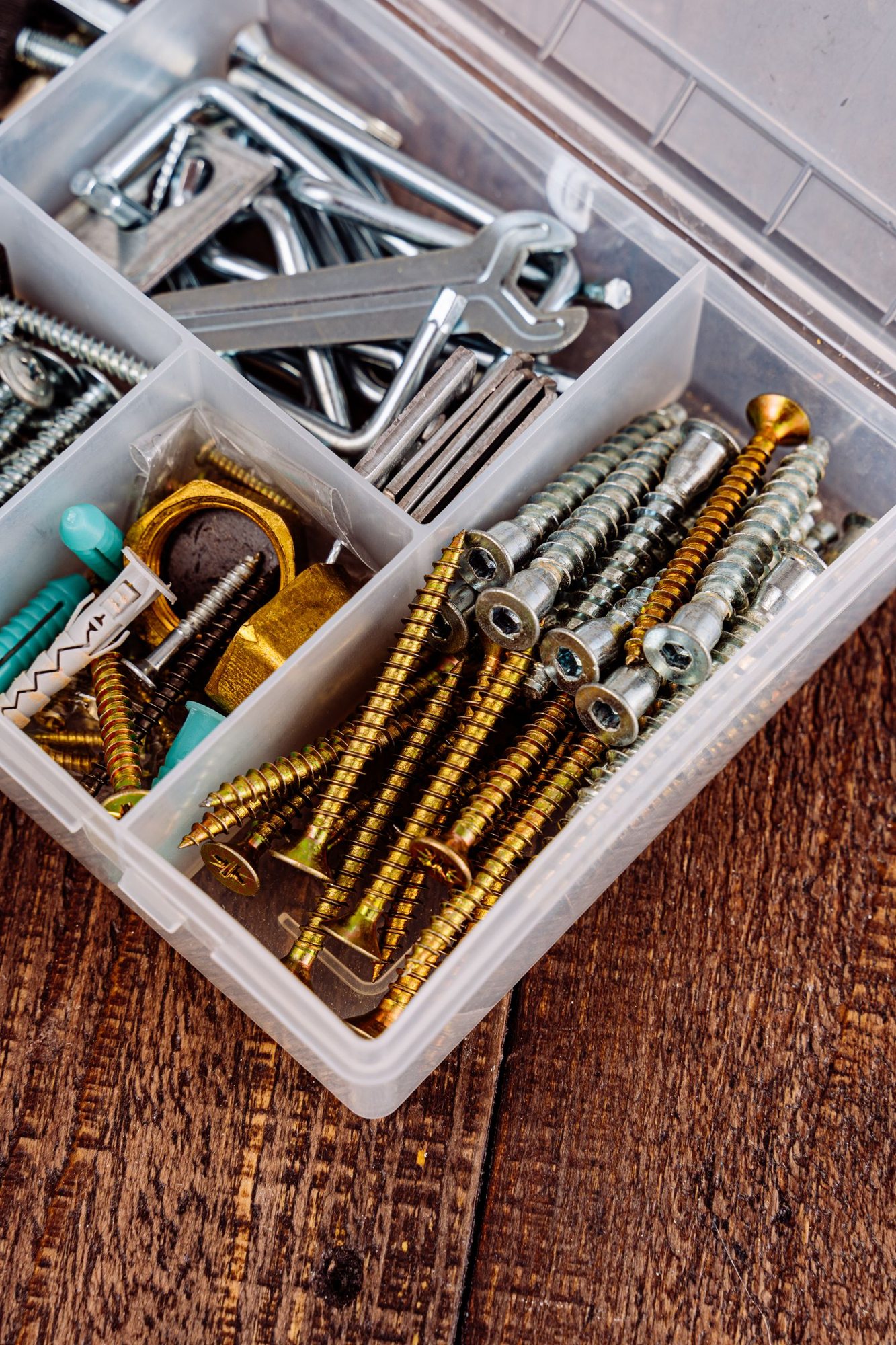
Divide the contents into a few labelled compartments. A sealable bag of spare screws belongs with the relevant furniture item, not in a general mixture. Keep its instructions or a photograph of the fixing beside it. A colleague should not have to work out which unfamiliar parts belong together.
Put heavier tools below lighter, protected materials. Limit the box to items the team can use safely and within the event's rules. Electrical connections, safety-critical structures and unfamiliar equipment are not suitable opportunities for improvised repairs while visitors move through the stand.
Choose a permanent place and clear limits
Keep the box somewhere accessible inside the stand. It should neither obstruct a route nor disappear among giveaways. Explain its location during the briefing and agree that used items go straight back. Record consumed materials on a note inside the lid so they can be replaced before the next event.
Add the responsible supplier's contact details and your stand number. When a fault is beyond your scope, a precise request for help is more valuable than another tool. Describe the affected item and its practical impact, such as a demonstration being unavailable, and keep visitors away from the work area.