Name the intended contents
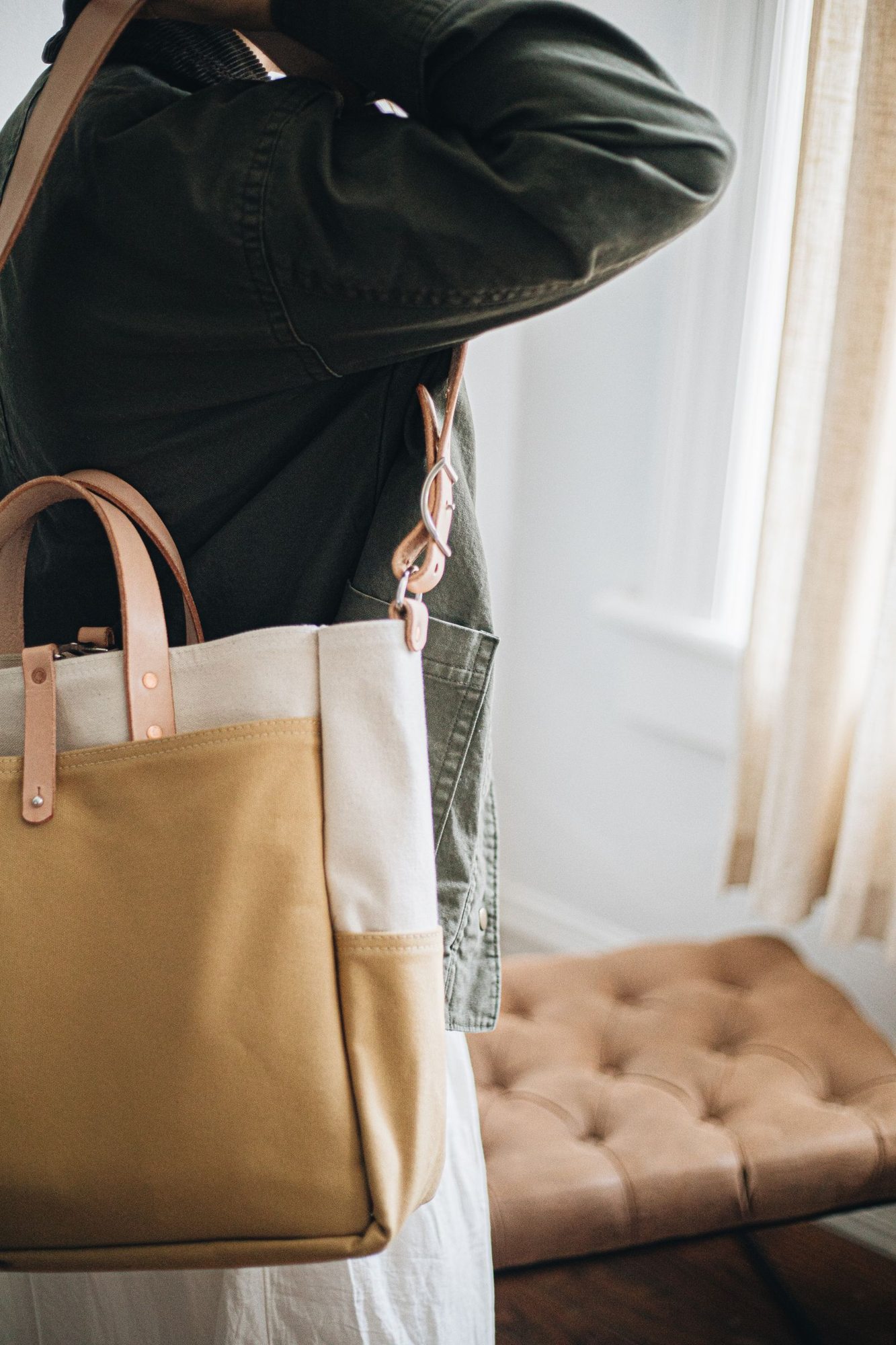
Decide whether the tote is for a small grocery purchase, temporarily removed clothing or selected exhibition documents. Those tasks create different size and strength requirements. Test it with realistic contents rather than judging only its tiny folded dimensions. If brochures must remain flat, check their format. For heavier shopping, consider whether handles and seams suit the intended load, following the manufacturer's specifications.
Try carrying it with the other luggage
Hold the filled tote together with your work bag. Can you still sensibly use a phone, ticket or handrail? An extra bag may help briefly yet become awkward during a long transfer. Also check the baggage conditions of your journey before treating it as an additional separate piece. The fact that it fits inside another bag when empty says nothing about the conditions governing its transport when full.
Balance access against closure
An open bag makes quick loading simple but contains its contents differently from a closed design. Consider whether small objects belong in a separate closed pouch. Confidential papers and valuable devices should not sit among loose brochures without appropriate protection. Give the folded tote a fixed place so it can be found when needed. A tiny bundle in the lowest internal pocket may be difficult to reach at the useful moment.
Reduce the load again afterwards
Before returning home, sort what genuinely needs to travel. The tote should cover a temporary requirement rather than automatically create a permanent additional load. Clean or dry it according to its care guidance before folding it again. Inspect seams and handles at the same time. If it remains unused across several similar trips, it may stay at home next time or be replaced by a more suitable solution you already own.