Divide the trip into useful stages
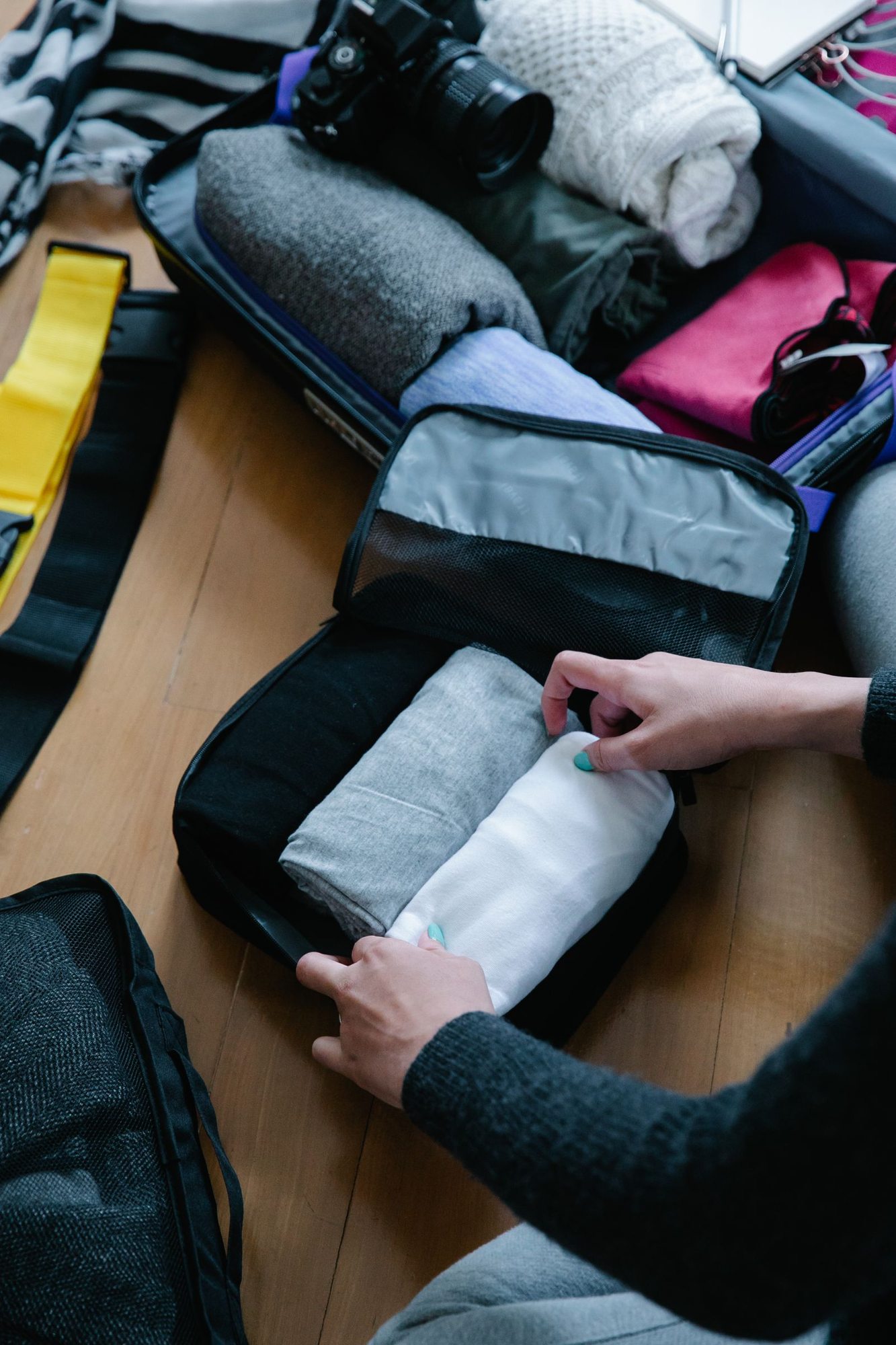
Decide which clothes are required at the first stop and which are needed later. A small cube for the first nights can sit on top while the second stage remains closed. Items used throughout the trip need their own accessible position. This arrangement is particularly helpful when the stays involve different tasks, such as setup followed by client meetings. It need not assign every garment rigidly to one date; some flexibility helps when appointments change.
Match the sizes to the suitcase
Place the empty cubes in the case you will actually use. Leave room for handles, internal curves and a shoe area. Many small containers can create unnecessary gaps. A few suitable sizes are often clearer than a large set whose pieces you take merely out of habit. Fill the cubes so they close without strong pressure. External order offers little benefit if every opening requires laboriously compressing the clothes again.
Keep identification simple
Distinguish stages by colour or a short removable label. If needed, write the destination or function rather than confidential itinerary details. Put a small reserve somewhere accessible without opening both stages. Worn clothing needs a separate arrangement instead of returning among unused pieces intended for the next stay. If something is damp, deal with it according to its care instructions before enclosing it tightly with the other belongings.
Reorder deliberately when moving
Finish the first stop by briefly checking used and remaining clothing. Move the second cube to the top for the following morning. Confirm that shared items still occupy the right place. The benefit comes not from containers alone but from this small handover between stages of the trip. Back home, you can see which sizes were useful and which extra packaging can stay behind next time.